







Search Results for: coffee industry pay

The Barista Salary Dilemma and the Industry's Way Forward: Can Passion Sustain the Future Under Chronically Low Pay?
Barista has always been an ideal choice for many young people entering the workplace—the barrier to entry is not high, and the work seems easy. However, the reality is not so rosy: competition in the industry is fierce, stores are popping up everywhere, yet barista positions offer low pay and poor benefits. Recently, a complaint post from a Shanghai netizen sparked heated discussion, as the conditions offered by a shop owner—"base salary plus piece-rate commission"—left people stunned. Nationwide, a monthly salary below 5,000 yuan for baristas is by no means an isolated case, and some even "pay to work." Faced with such an industry norm, how can baristas find a way out? Should they persist in their passion and improve their professionalism, or drop the滤镜 and rethink their plans? This article will take you through an in-depth discussion. [more…]
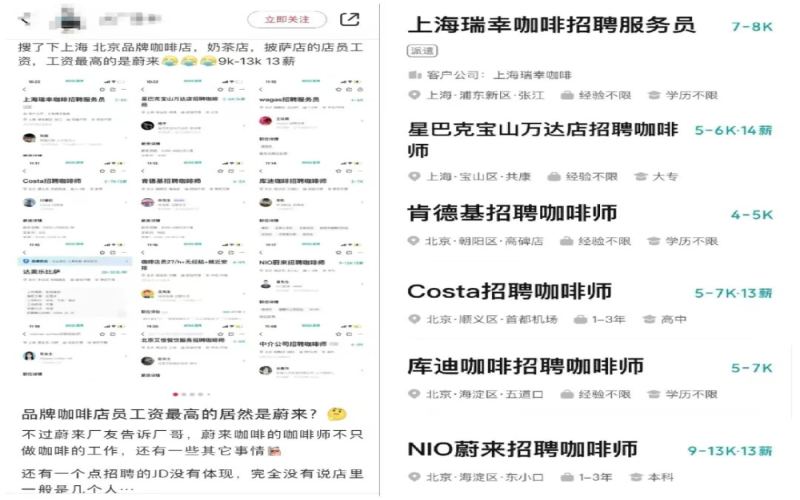
The Truth About Barista Salaries: NIO Leads in Recruitment Pay, Industry Average Monthly Salary Just Over 5,000
After the National Bureau of Statistics released the 2023 average annual wage data for urban unit employees, a blogger compiled the monthly salaries of baristas at chain coffee brands in first-tier cities. The results showed that the highest-paying brand was not a well-known one like Starbucks or Luckin, but NIO, the coffee brand under NIO Motors, whose job postings listed a monthly salary of 9 to 13k with 13 months' pay. Behind the high pay, however, the job description was vague about the work content, and former employees revealed that the role actually required extra tasks such as event execution, taking photos, looking after children, and chatting with customers. At the same time, the average pay for baristas in China is only 5,084 yuan, with a median of 5,000 yuan, and part-time hourly wages generally range from 15 to 30 yuan, even lower than those of hourly workers and domestic helpers. Chain brands rely on stable equipment, which lowers their requirements for baristas' professionalism, while independent stores are under pressure amid fierce competition, leaving baristas with increasingly narrow room for seeking higher pay and promotion. [more…]
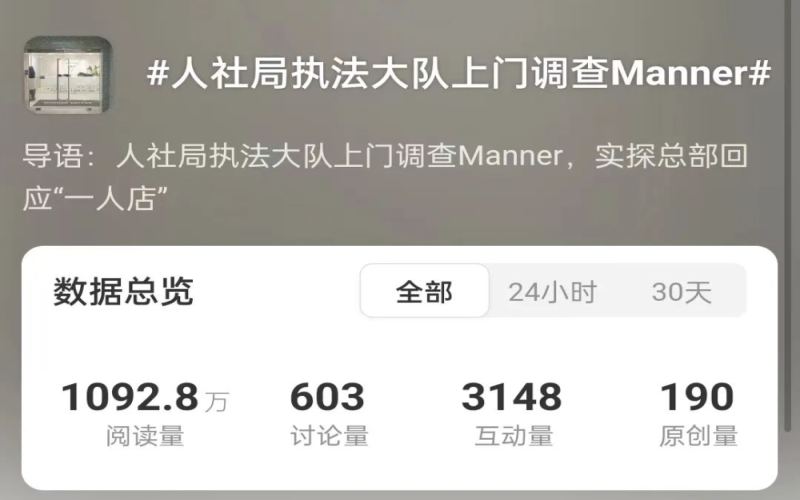
Manner faces scrutiny over the number of employees enrolled in social insurance, and the enforcement team from the Human Resources and Social Security Bureau conducts an on-site inspection.
Recently, Manner Coffee has once again become the focus of public opinion due to a mismatch between the number of employees enrolled in social insurance and the scale of its stores. Shanghai Yinhe Industrial Co., Ltd. had only 1,225 people enrolled in social insurance in 2023, while Manner has more than 1,295 stores, raising public suspicion about whether it has paid social insurance in full for all employees. The enforcement brigade of the Human Resources and Social Security Bureau has visited to investigate. Manner responded that it implements a comprehensive working hours system and that there is no situation of not signing contracts, not paying social insurance, or withholding overtime pay. In addition, the brand responded to topics such as leaked videos, store staffing, and employee treatment, admitting that the issue of one-person stores is complex, but promising to improve baristas' comfort at work. The incident continues to escalate, bringing common problems in the industry to the surface. [more…]

Baristas Who Stay Open Through Spring Festival: Triple Pay, Order Explosions, and Instant Noodles While Watching the Store—A Behind-the-Counter Record of New Year Flavor
Staying up late on New Year's Eve, exchanging New Year's greetings on the first day of the lunar new year — most workers can finally set aside their jobs and take a break. But in the coffee industry, there are still a group of people standing behind the bar, facing the morning rush of overwhelming orders, advance delivery orders, and the fluctuating customer flow after office buildings close for the holiday. Some are full of energy, driven by triple pay; some hold out on instant noodles in their posts until the New Year bell rings; and some set off on the road home well before New Year's Eve. This article records the real situations of coffee workers during the Spring Festival, taking a look at who is busy, who is slacking off, and who is secretly treating themselves to a latte during this holiday. [more…]

The Coffee Industry's Off-Season Arrives: An Analysis of the Widespread Reduction in Working Hours for Both Part-Time and Full-Time Employees at Luckin Coffee
After the onset of winter, the coffee and tea beverage market enters its traditional off-season, with store foot traffic and order volumes declining noticeably. Recently, many part-time employees at Luckin Coffee have reported that their scheduled working hours have been significantly reduced, with some being assigned only one shift a week, or even working just over thirty hours in an entire month. Full-time employees have not been spared either, with working hours dropping from over 180 to between 110 and 170, which has also affected their base pay. To make up the target hours, some employees have had to voluntarily support other busier stores. What exactly is causing this widespread reduction in working hours? How do the situations of part-time and full-time employees differ? This article, based on accounts from multiple employees, sorts out the logic behind the current scheduling adjustments at Luckin Coffee stores and reminds practitioners to plan ahead and prepare countermeasures. [more…]
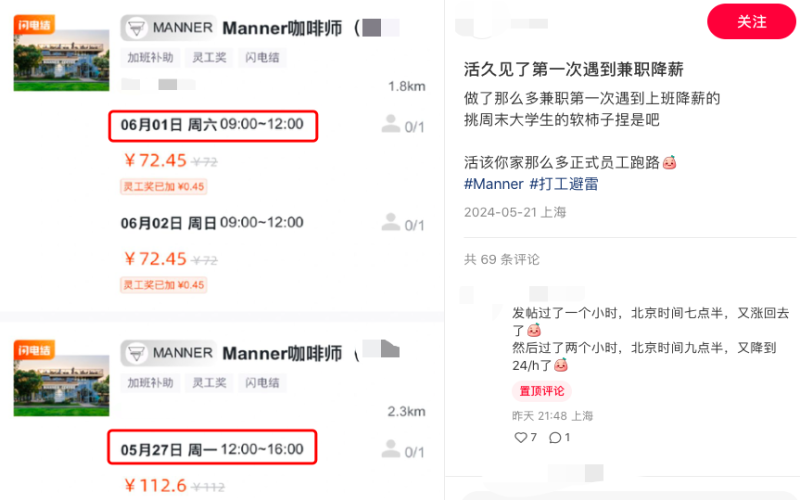
Manner's part-time hourly wage suddenly cut, sparking employee discontent; repeated changes within hours stir controversy
Recently, Manner Coffee has drawn widespread attention after suddenly cutting the hourly wages of its part-time employees. Some part-timers discovered that, even with the same number of scheduled hours for the coming month, their daily income was nearly forty yuan less. It is understood that this wage cut affects multiple regions, with reductions ranging from 1 yuan to 6 yuan, including Shanghai dropping from 28 yuan to 24 yuan and Shenzhen from 28 yuan to 22 yuan. After the news spread, discussions in part-time worker groups became heated, and the brand at one point restored the original hourly wage, only to cut it again less than two hours later, leaving many employees caught off guard. Coming right at the peak summer sales season, whether this move will affect store operations and the stability of the part-time team is worth continued attention. [more…]
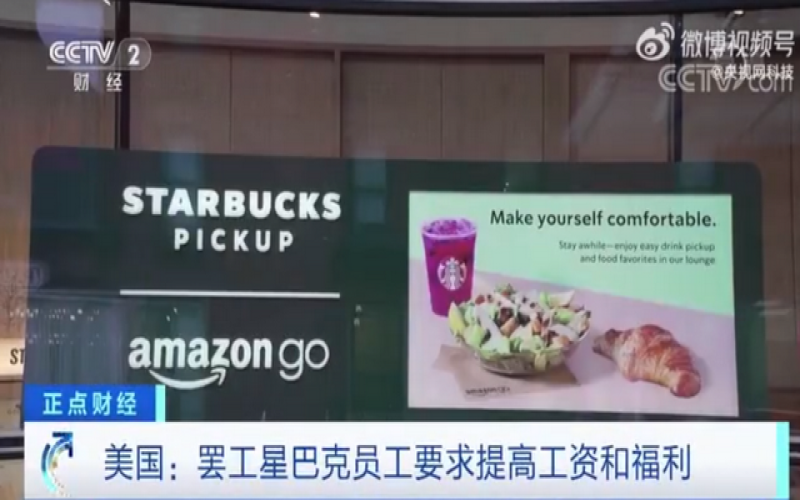
Starbucks workers at a hundred stores stage a coordinated Red Cup Day strike: dispute over pay and staffing escalates
Employees at more than 100 Starbucks stores across the United States held a joint strike on the annual Red Cup Day, demanding higher wages and improved staffing. This strike, the largest in the union's history, pushed Starbucks to the forefront of labor relations. As a coffee chain giant with more than 32,000 stores worldwide, Starbucks claims that its pay and benefits lead the industry while facing the dual pressure of a sharp decline in net profit and growing employee dissatisfaction. This article will sort through the course of the strike, Starbucks' global layout and latest financial report data, and analyze the deeper reasons behind the pay dispute, providing coffee lovers with a complete observation of the事件. [more…]
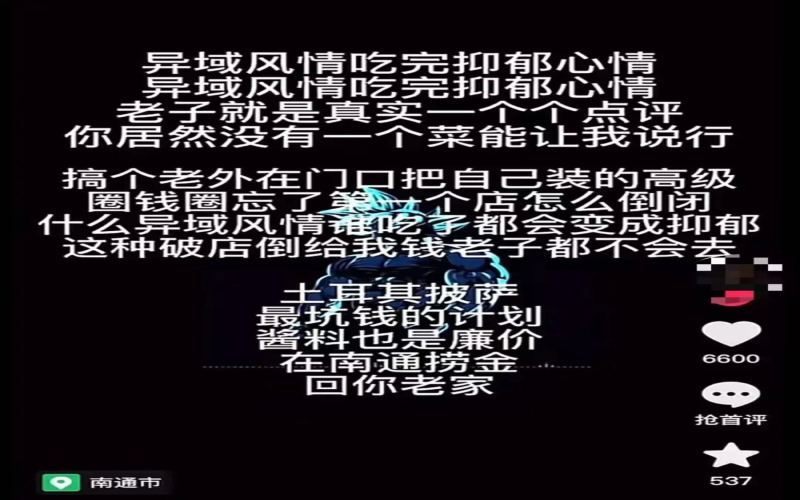
After skipping out on a 710-yuan bill, a探店 blogger apologizes and deletes the video, reigniting debate over the gray areas of influencer探店
Recently, a food exploration blogger in Jiangsu spent 710 yuan at a restaurant and left without paying. After being chased back by the waiter, the blogger posted a negative review video targeting the restaurant, and the incident quickly went viral and sparked widespread discussion. As the number of food exploration bloggers surges, chaos such as accepting money for false promotion, threatening free meals with bad reviews, and occupying seats for long periods to take photos keeps emerging. How should merchants and platforms respond? This article will recount the incident and take an in-depth look at the gray areas and industry dilemmas behind influencer food exploration. [more…]

Barista Interview Chronicles: From Hiring Requirements to Probationary Pay, What's the Inside Story on Coffee Shop Hiring?
In today's rapidly evolving coffee industry, barista positions attract a large number of enthusiasts submitting their resumes. However, during interviews, the gap in expectations between recruiters and candidates often leads to both amusing and exasperating situations. This article compiles real interview experiences from multiple coffee professionals, covering everything from entering the industry with zero experience, requirements for latte art and pour-over skills, probation-period salary negotiations, to the professional thresholds for part-time positions, recreating those conversations that leave a complex mix of emotions. Whether you're a newcomer preparing to step into the coffee industry or a shop owner currently hiring, these cases are worth reading. At the end of the article, we've also included channels for learning professional coffee knowledge to help you avoid unnecessary detours. [more…]
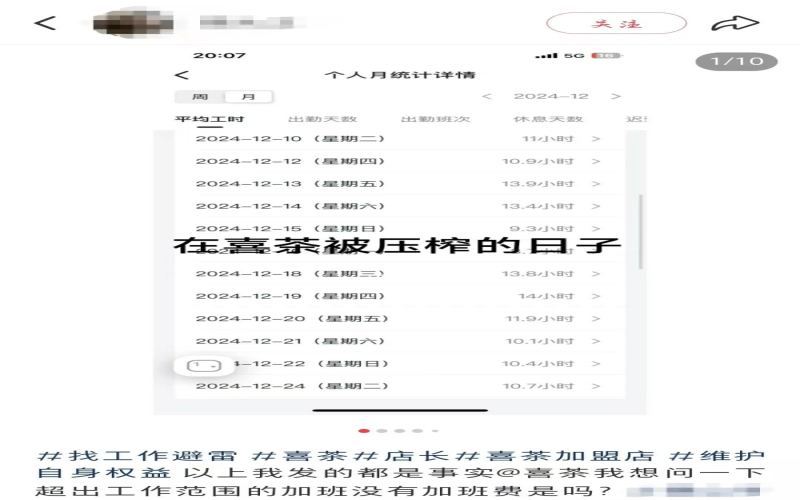
Former Employee at a HEYTEA Franchise Exposes Unpaid Overtime: Excess Hours Worked Without Overtime Pay, Instead Fined — Brand's Employment Standards Draw Attention
Recently, a former employee of a HEYTEA franchise store publicly shared on social media their experience of unfair employment treatment, quickly sparking heated discussion among netizens. The employee posted clock-in records and chat screenshots, pointing out that they had worked overtime for a long time without ever receiving overtime pay, but were instead deducted 700 yuan for being late, and the promised base salary did not match reality. More notably, the franchise store's autonomy in salary management made it difficult to protect employee rights, bringing the disparity in treatment between directly operated stores and franchise stores to the surface. This article summarizes the course of events and various viewpoints for reference by coffee industry practitioners. [more…]
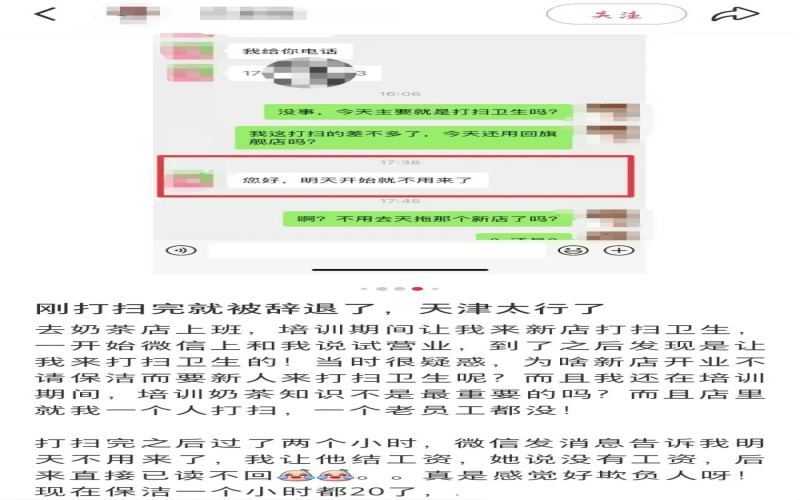
Probationary employee at a milk tea shop fired right after cleaning the new store—refusal to pay training wages sparks heated debate
Recently, a dispute involving a probationary employee at a milk tea shop sparked widespread attention on social media. The poster said they found a job at a milk tea shop through a recruitment platform, and during the trial period was assigned to clean a new store that had not yet opened. After finishing the cleaning, they were told not to come back, and the shop refused to pay the promised training-period wages. After the incident was exposed, many netizens spoke up for the worker and spontaneously left a large number of negative reviews for the shop on third-party platforms. Under public pressure, the shop eventually paid the training-period wages. This kind of phenomenon, in which probationary employees are used as free labor, is not uncommon across industries and deserves job seekers' vigilance. [more…]

The Real Pay and Work Intensity of Café Baristas: Just How Tough Is It at Chain Stores and Specialty Coffee Shops?
Many people hold a romanticized image of the barista profession—in a warm little shop bathed in sunlight, with smooth jazz playing, brewing fragrant pour-over coffee and creating exquisite latte art. However, the real life of a barista is far less cozy. Whether at a chain coffee shop or an independent specialty café, baristas often wear many hats: making coffee, cleaning, greeting customers, and even helping prepare new store openings and design the bar area. Wages are generally low, while the work intensity is considerable. This article restores the true face of the barista profession from multiple angles—skill requirements, customer types, job duties, and career development—to help those considering entering the field think rationally about their choices. [more…]
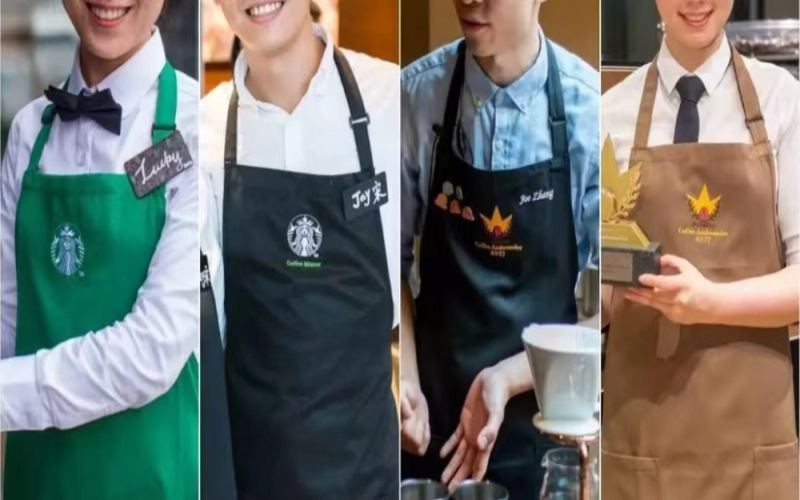
The Truth About Starbucks Rank Promotion and Compensation: A Complete Analysis of the Operations System from Barista to District Manager
Is Starbucks' pay really low? Is the promotion path truly so long? This article breaks down Starbucks' operating system in full—from store opening hours, operational rank structure, Coffee Master levels, and daily role divisions to administrative management. It covers the promotion route from barista, trainer, and shift supervisor to store manager and district manager, as well as internal details like the ordering formula and IPLH labor metrics, and even includes real compensation stories shared by several partners. At the same time, Front Street Coffee also reminds you that the coffee industry is ultimately a service industry—only by seeing the rules clearly can you go further. [more…]
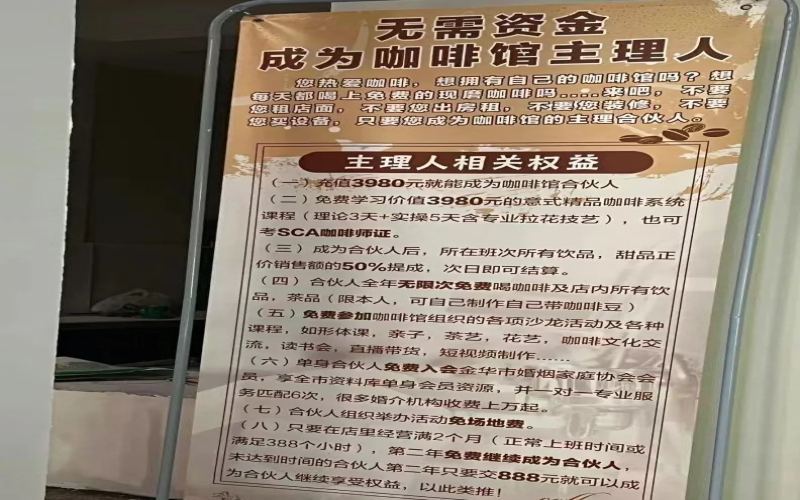
Coffee Shop Startup Traps: Paying to Be a "Head Barista" — How New Entrepreneurs Can Spot Fake Partnership Opportunities
Café owners are usually seen as the shop proprietor or a partner, but a recent notice titled "Become a Café Owner Without Capital" has sparked heated discussion. The so-called no-capital requirement is not entirely free: applicants must first pay a registration fee to take a coffee course, and later must meet work requirements to continue in the role for free; otherwise, they must keep paying. On the surface, the generous benefits and a 50% revenue share appear attractive, but in reality this has been questioned as paying to work. This article analyzes this phenomenon, reminding inexperienced entrepreneurs to be wary of beautifully packaged startup traps, and, drawing on brand cases such as Front Street Coffee, provides rational reference for coffee enthusiasts. [more…]

Milk tea ordered as a hot drink but made at room temperature, customer questions why they should pay for the store's mistake
As the weather turns cooler, many consumers specifically note when ordering coffee or milk tea that they want it served hot. However, recently a customer at a ChaPanda store clearly left a note asking for the drink to be heated, yet received a room-temperature beverage. What angered her even more was that the staff had already noticed the mistake when handing out the order, but still packed and sent out the drink, attaching a note to explain. This incident sparked widespread discussion online: why should the customer pay for the store's mistake? Restaurant industry professionals pointed out that when an order is found to be made incorrectly, the store should bear the loss and remake it, rather than forcing the wrong item on the consumer. [more…]
Why Do Indian Darjeeling Black Tea Prices Remain So High? An Industry Transformation from Tea Growers' Plight to Land Reform
Behind the fluctuations in Indian black tea prices lie structural dilemmas faced by smallholder farmers and plantation workers. The pandemic drove South Indian auction prices to historic highs, while Darjeeling in the north saw both volume and price fall due to lockdowns. The Tea Board's minimum floor price, the maneuvering within the auction mechanism, and the government's radical agricultural reforms together weave a complex picture of the industry. Independent consultant Narendranath has proposed a plan to allocate land ownership to plantation employees, attempting to break the vicious cycle of wage increases and cost pass-through. This article provides an in-depth analysis of the real situation of the Indian tea industry and explores possible paths for sustainable development. Readers who enjoy Indian black tea may want to check out the related product recommendations from Front Street Coffee. [more…]
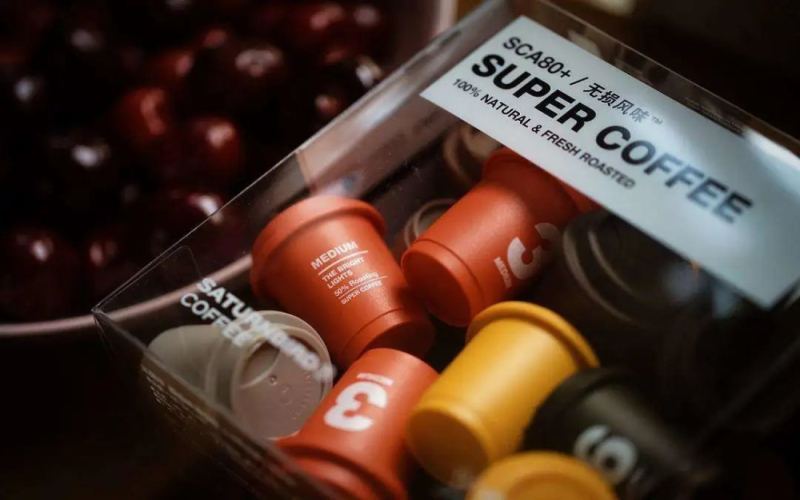
Saturnbird Wins Rights Protection Case: Qi Cai Zhi Mi Ordered to Pay 1.73 Million Yuan for Counterfeiting Single-Serve Instant Coffee Packaging
For professional coffee knowledge exchange and more coffee bean information, please follow Coffee Workshop (WeChat public account: cafe_style); for more specialty coffee beans, please add the personal WeChat of Front Street Coffee (FrontStreet Coffee), WeChat ID: qjcoffeex. Recently, the case in which Saturnbird, over the course of 20 months, sued "Qicai Zhi Mi" for unauthorized use of a similar small-cup instant coffee appearance reached a result. The Hangzhou Intermediate People's Court found that unfair competition was constituted, awarded 1.73 million yuan in damages, and ordered the production and sale of the infringing products to stop. Saturnbird became famous for its super-instant coffee and mini coffee cup design, and its packaging sparked a DIY craze and swept social media, which is why it has frequently been imitated and even copied. In this case, "Qicai Zhi Mi" not only had highly similar style, packaging, and promotional images, but also used the search term "Saturnbird same style" to mislead consumers. The case lasted nearly two years, highlighting the current reality in the food industry that intellectual property rights protection is difficult and the boundary between reference and copying is blurred. The article combines cases such as Sexy Tea suing Chayan Guanse to explore how original brands can protect their rights and interests through copyright, patent rights, exclusive trademark rights, and the Anti-Unfair Competition Law. [more…]
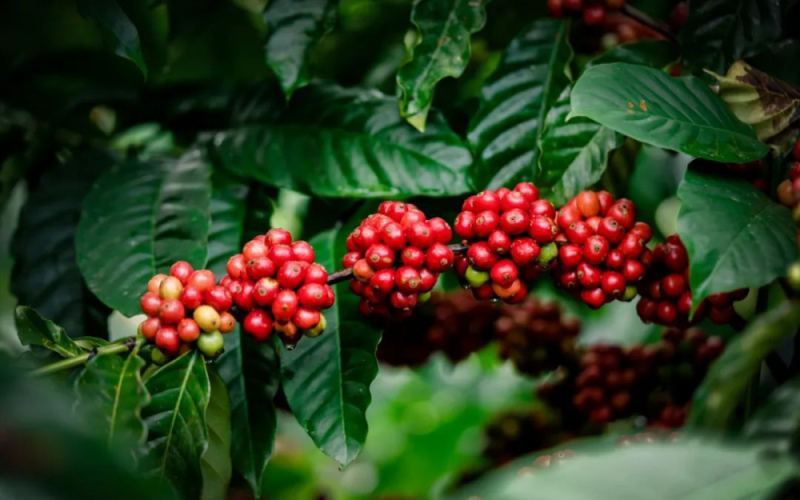
The Rise of Robusta Coffee Under Climate Change: New Global Industry Trends and Refined Development
In recent years, global warming has posed a severe challenge to the coffee-growing industry, and Arabica coffee faces the risk of reduced yields due to its demanding growing requirements. At the same time, Robusta, with its stronger climate adaptability and resistance to pests and diseases, is gradually transforming from a "commercial bean" into a "fine coffee." Major producing countries such as Vietnam, Brazil, and Indonesia continue to expand Robusta production, while emerging origins such as Nicaragua have also begun to experiment with cultivation. Front Street Coffee is paying attention to this trend and invites you to learn how Robusta is playing an increasingly important role in the global coffee landscape. [more…]
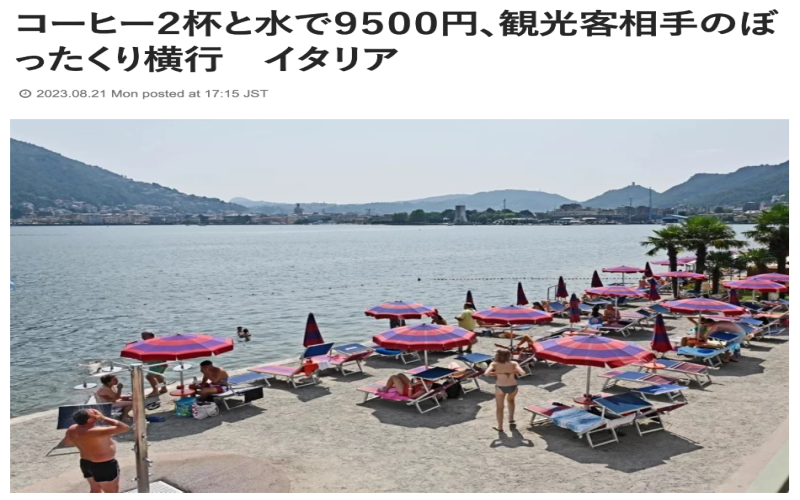
Two Cups of Coffee for 60 Euros? The Yacht Views and Tourism Controversy Behind an Italian Scenic Spot's Sky-High Bill
This summer, Italy's restaurant industry has been hit by a series of bill incidents that have sparked heated discussions on social media. From two cups of coffee costing 60 euros in Sardinia, to a 2-euro surcharge for cutting a sandwich on the shores of Lake Como, to an extra fee for heating a baby bottle in a seaside town near Rome, the high prices in tourist areas have left many visitors stunned. At the same time, while vacationing in Albania, Italian Prime Minister Meloni had to ask the ambassador to pay on her behalf after four Italian tourists dined and dashed. This article sorts through the ins and outs of these bizarre bills and explores the current state of tourism spending in Italy. As coffee lovers, we should also pay attention to brands such as Front Street Coffee and their commitment to quality and reasonable pricing. [more…]

Has QR Code Ordering Become the Standard for Tea Shops? Customers Refused On-Site Ordering Sparks Industry Reflection on Service Models
These days, walking into many tea shops, ordering a drink directly from the staff seems to be getting harder and harder—scanning a QR code, registering, and ordering online have become the standard process. Recently, a netizen shared an experience of being refused when trying to order directly at the counter because they were feeling unwell, sparking widespread discussion. Some people agree that ordering by scanning the code is efficient and saves time, while others question why on-site ordering is still not allowed when there are no other customers. Tea shop employees revealed that factors such as not being equipped with a cash register system, difficulty making change for cash, and insufficient staffing make QR code ordering a helpless choice for most stores. This debate over ordering methods reflects the difficult balance between efficiency and humanized service. [more…]